RedTeam Reviews, Pricing, and Alternatives (June 2026)
RedTeam reviews, pricing, and alternatives for June 2026. Compare features, performance issues, and better options for commercial contractors.
When you're comparing RedTeam alternatives, you're probably dealing with one of two things: either the performance issues finally got to you, or your field team is asking why the mobile app feels five years behind. RedTeam does some things right with contract management and QuickBooks sync, but that doesn't help when the interface freezes or simple workflows take too many clicks. Let's break down what RedTeam actually costs, where it works, and which alternatives might fit better if speed and mobile tools matter to your operation.
TLDR:
- RedTeam offers contract-based project management with QuickBooks integration, but suffers from slow performance and frequent system freezes
- Users report an outdated interface, limited mobile features, and extended training requirements that delay implementation
- Constructable provides flat-rate pricing with unlimited users, full mobile-desktop feature parity, and under 21-day onboarding
- AI search finds answers across drawings, specs, and documents in seconds with direct source citations
- Constructable unifies drawings, RFIs, submittals, financials, and field tools in one fast, connected system built for mid-size commercial GCs
What is RedTeam and How Does It Work?
RedTeam is a cloud-based construction management system designed for commercial contractors running multiple jobs simultaneously. The software covers the full project lifecycle, with tools for project management, financial tracking, drawing management, and field work that follow a job from bid through closeout. As the construction management software market grows, contractors have more options than ever to find systems that match their actual workflows.
The system comes in three versions. RedTeam Flex is built for mid-size to enterprise contractors who need full financial controls and project oversight. RedTeam Go strips things down for smaller contractors who want core project management without the extra weight. Fieldlens works as a standalone field collaboration tool that can connect to the broader RedTeam system if needed.
RedTeam structures projects around the contract. Budgets, change orders, submittals, and RFIs tie back to contract line items and cost codes. This setup works well for teams that first track projects through a financial lens. The QuickBooks integration syncs cost codes and financial data between systems, reducing duplicate entries for teams already running QuickBooks for accounting.
Field crews can log daily reports, track punch lists, and upload photos through mobile apps. Office teams handle RFIs, submittals, and drawing sets through the web interface. How well these pieces connect depends on which version you're running and how your team configures it upfront.
Why Consider RedTeam Alternatives?
RedTeam works well for certain types of contractors. Teams that organize projects around contract line items, need tight QuickBooks integration, and value straightforward pricing will find that it fits their workflow. The customer support is responsive, and the contract-based structure makes sense if that's how you think about your jobs.
But performance issues come up often. Users report slow loading times, especially when working with larger drawing sets or switching between modules. System freezes happen frequently enough to disrupt work. The mobile app lacks features available on desktop, which creates friction for field teams trying to stay in sync with the office.
The interface feels dated. Recent updates haven't fixed the underlying clunkiness, and workflows like submittals require 8-10 clicks vs. 3-4 in Constructable. Password restrictions prevent the use of special characters, which raises security questions for IT-conscious teams.
Training resources are limited. Most teams need dedicated onboarding support to get up and running, which extends implementation timelines. And despite positioning itself as all-in-one, RedTeam has feature gaps compared to competitors in areas like drawing collaboration and field tools.
If affordability and accounting integration matter most to you, RedTeam might be a good fit. But if your field teams need responsive mobile tools, or you're tired of waiting for pages to load, alternatives start to make sense.
Best RedTeam Alternatives in March 2026
If you're looking at RedTeam, you're likely weighing other construction management options. Here's how the most common alternatives stack up, along with where each one makes sense and where it doesn't.
Constructable works for mid-size general contractors who need drawings, RFIs, submittals, daily logs, and financials to talk to each other without friction. The AI search pulls answers from plans, documents, and photos in seconds. Pricing is a flat fee based on your plan with unlimited users. No per-seat charges, no audits for adding subs or consultants. Onboarding wraps in under 21 days with real support, and teams learn the system fast because it's built how you think, not how software companies think.
Procore covers preconstruction through closeout with unlimited users and a large integration library. But pricing is tied to construction volume, the learning curve requires dedicated power users, and the system leans heavily toward enterprise needs as it moves upmarket. Mid-size contractors often get better usability and value elsewhere.
Autodesk Forma (f.k.a. Construction Cloud) stitches together BIM 360, PlanGrid, and BuildingConnected. If you already run Autodesk products, the BIM integration makes sense. But modules feel disconnected because they were built separately, onboarding drags with high costs and consultant dependency, and updates lag due to old architecture.
Fieldwire handles field tasks well with simple plan markups and fast mobile adoption. But it stops there. You'll need separate systems for budgets, change orders, and owner billing. Per-user pricing also climbs as your team grows.
Ingenious Build serves project owners managing portfolios. For general contractors, the owner-first hierarchy creates confusion. Actions tie to projects in ways that don't match how GCs work day-to-day, hurting adoption across your team and subs.
Feature Comparison: RedTeam vs Top Alternatives
The table below shows how RedTeam compares to top alternatives across the features that matter most when managing commercial projects. Look for where gaps in one system force you to add workarounds or additional tools.
| Feature | RedTeam | Constructable | Procore | Autodesk Forma (f.k.a. Construction Cloud) | Fieldwire | Ingenious Build |
|---|---|---|---|---|---|---|
| Unified System Design | No (multiple product lines) | Yes | No (multiple products) | No (acquisition-based) | No (field-only) | No (abstract hierarchy) |
| Drawings-First Collaboration | Limited | Yes | Yes | Yes | Basic | Limited |
| Financial Management | Yes | Yes | Yes | Yes | No | Yes |
| Unlimited Users | Yes | Yes | Yes | No | No | Varies |
| Mobile App Quality | Limited features | Full feature parity | Good | Varies by module | Excellent | Limited |
| AI-Powered Search | No | Yes | Limited | Limited | No | No |
| QuickBooks Integration | Yes (real-time) | Yes (two-way sync) | Yes | Yes | No | Limited |
| Onboarding Time | Varies, needs support | Under 21 days | Extended | Extended, often outsourced | Self-serve | Extended |
| System Performance | Slow, freezes reported | Fast | Good | Varies | Good | Varies |
RedTeam's product line spans multiple systems that don't naturally share information. This creates friction between office and field teams who need to manually bridge gaps. Constructable treats the entire project as one connected workspace where drawings, financials, and field updates live together. No jumping between separate tools or re-entering information.
The onboarding difference matters too. RedTeam implementations can drag on depending on your support track, while Constructable gets most teams up and running in under three weeks.
Why Constructable is the Best RedTeam Alternative
Constructable solves what RedTeam doesn't. The system is fast. Pages load instantly, drawings open without lag, and nothing freezes when you're trying to get work done. The mobile app mirrors the desktop experience, works offline with drawings, and gives field teams the same tools office staff use. No feature gaps, no workarounds.
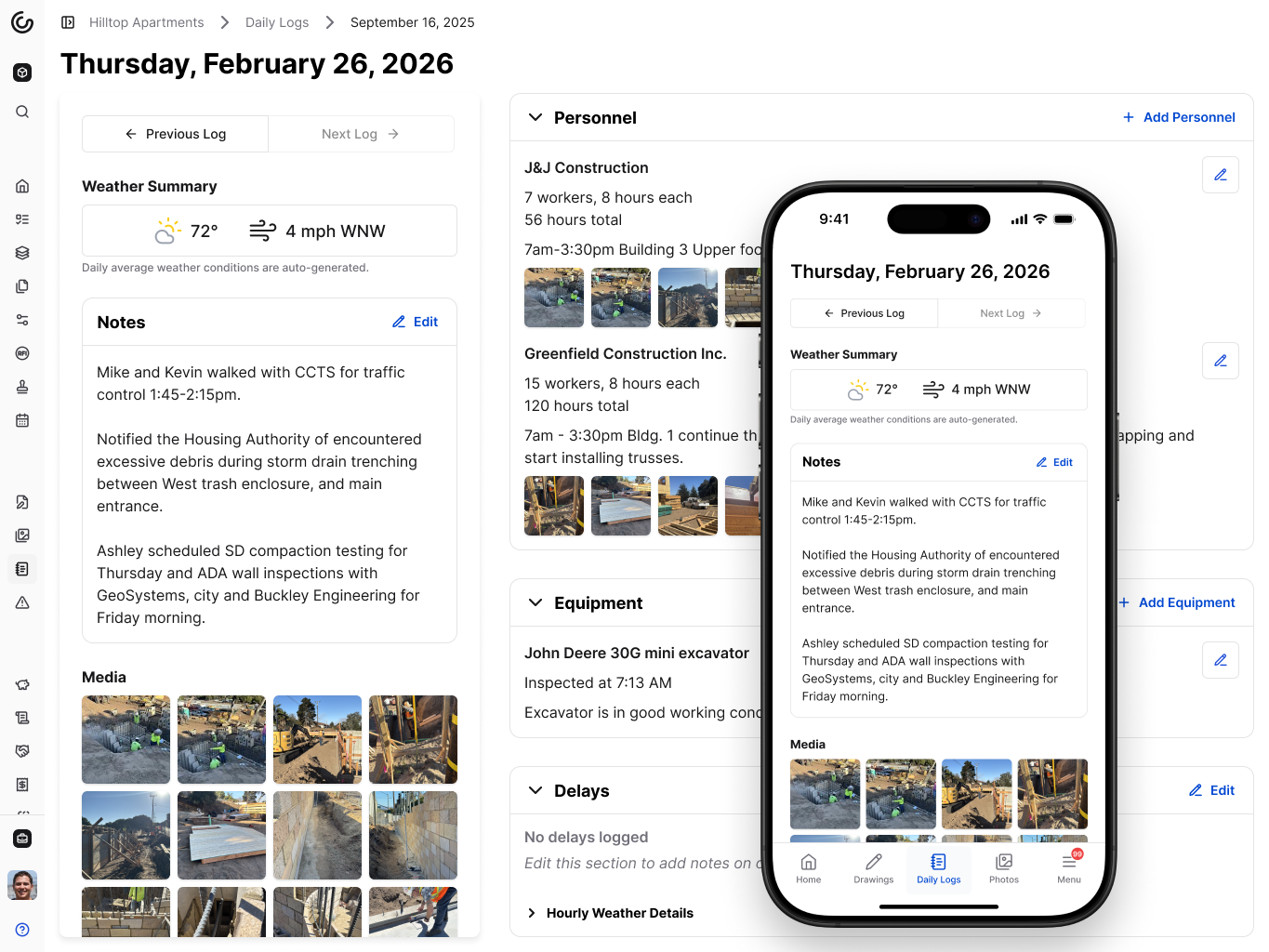
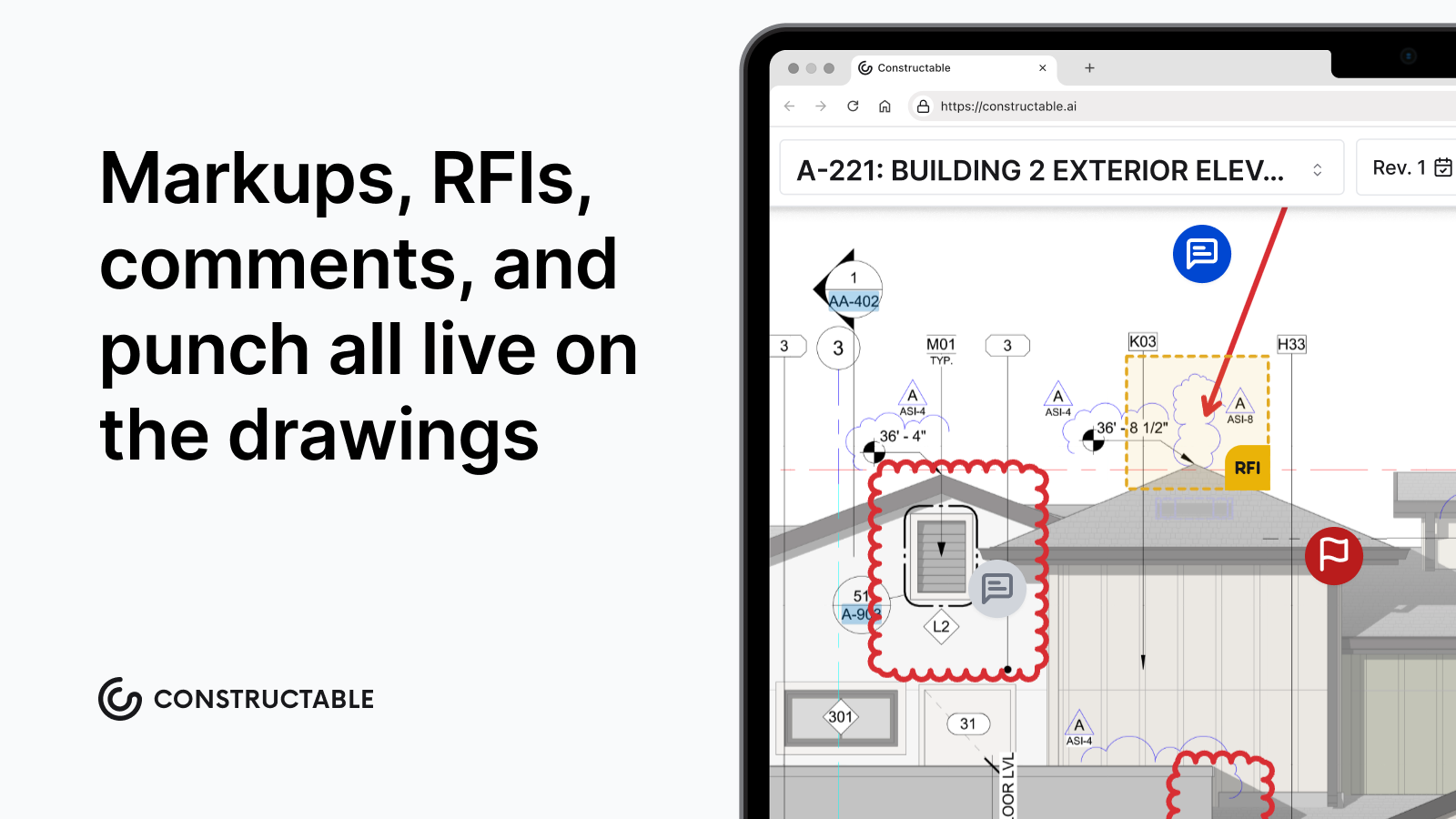
You won't need weeks of training. Most teams start using Constructable on day one because the workflows match how you already think about projects. Drawings sit at the center, with RFIs, submittals, photos, and daily logs connected right where they belong. The AI search finds answers across plans, specs, and documents in seconds, sourced directly back to the original file.
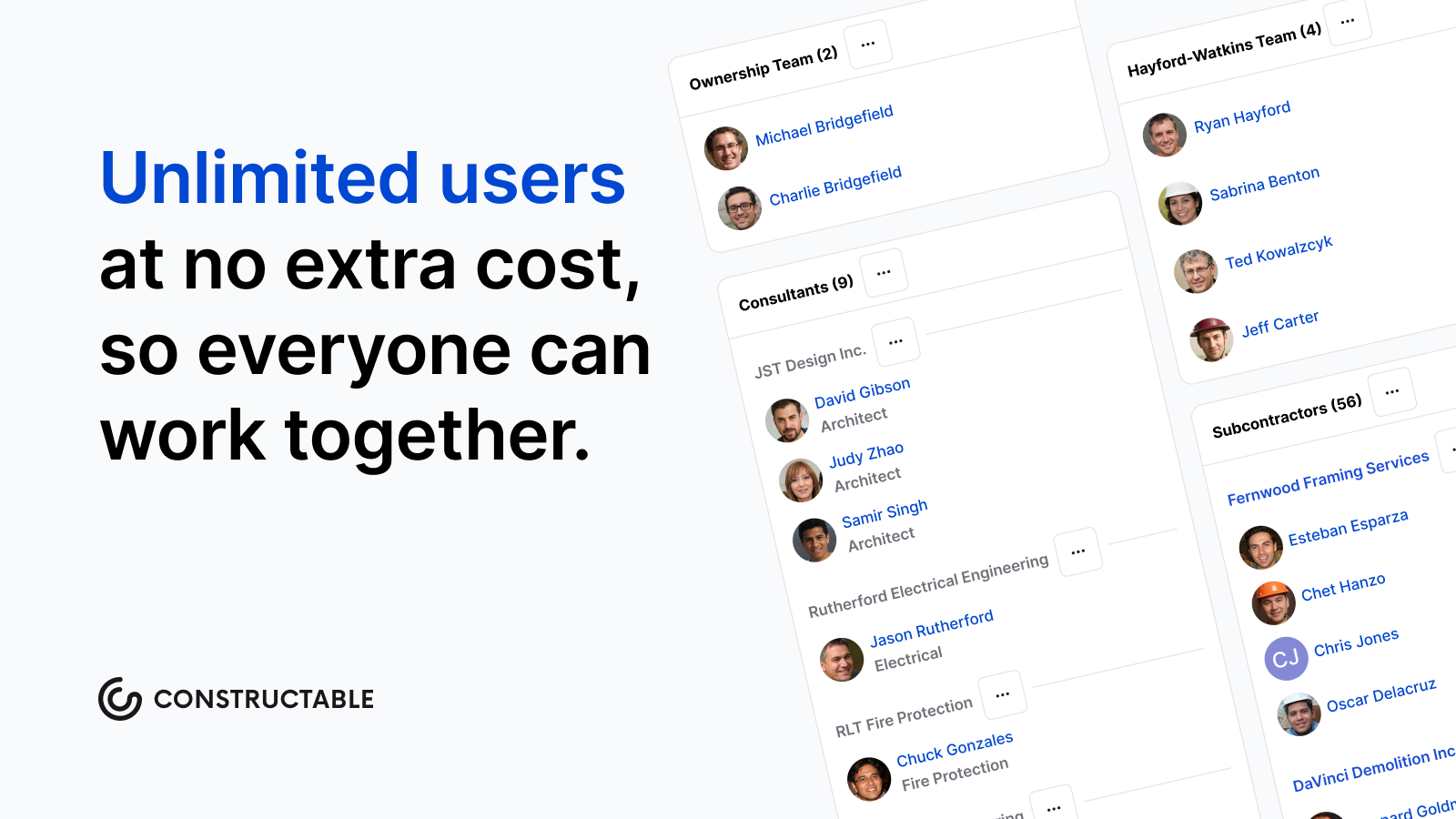
Pricing is straightforward. One flat fee based on your selected plan. Unlimited users across your entire team, including subs, consultants, and owners. No audits, no overage fees, no penalty for growing. Reviews consistently mention RedTeam's straightforward pricing as a strength, but we take it further by removing user limits completely.
If RedTeam feels like it's holding you back more than helping you move forward, we built Constructable for exactly that reason.
Final Thoughts on Moving Past RedTeam
If RedTeam's system freezes and mobile limitations are slowing down your team, switching to better construction management software stops costing you time every day. Constructable runs fast, works offline in the field, and gets your whole team on board in under 21 days with flat pricing and unlimited users. We built it for contractors who need software that just works without the friction.
FAQ
When should you consider moving away from RedTeam?
If your team is losing time to slow page loads and system freezes, or your field crews can't access the tools they need on mobile, it's time to look elsewhere. RedTeam works for teams who value affordability and QuickBooks integration above all else, but if performance issues are disrupting daily work, alternatives like Constructable deliver faster systems with full mobile feature parity.
What features matter most when comparing RedTeam alternatives?
Focus on system performance, mobile app quality, and how well the software connects office and field work. Look for platforms where drawings, RFIs, submittals, and financials live together instead of forcing you to jump between separate tools. Onboarding speed matters, too: some systems take months to implement, while others, like Constructable, get you running in under 21 days.
Can you switch construction management software without disrupting active projects?
Yes, but onboarding time and data migration support make the difference. Constructable wraps implementation in under 21 days with real support included, no extra fees for data migration. Most teams start using the system on day one because workflows match how you already think about projects, so active jobs keep moving without long training periods.
What's the real difference between Constructable and other all-in-one systems?
Constructable was built as one connected system from the start, not stitched together from acquisitions. That means drawings, financials, and field tools talk to each other naturally without manual bridging. You get unlimited users at a flat fee with no audits or overage charges, and the AI search finds answers across plans, specs, and documents in seconds with direct source links.